Showing posts with label Flowers. Show all posts

Monday, August 4, 2014

Rosa 'Abraham Darby'


'Abraham Darby' is an English rose that was bred by David Austin. The flowers come in pinkish apricot color with a fruity fragrance and the leaves are small-sized and glossy. The plant is a vigorous medium sized bush with arching growth habit. Some consider it as a small climber but in my garden I prune it often both to keep the size in check and to encourage blooming. In my garden, I find 'Abraham Darby' resistant to black spot and powdery mildew.

'Abraham Darby' rose was named after an inventor who played a significant role in the industrial revolution. In the smaller world, however, this plant made it into my garden in honor of my son who is nicknamed Brahms. :)


Regardless of the name, Abraham Darby is a garden-worthy rose!

Monday, June 30, 2014

Radicchio in my Kitchen Garden


Radicchio (Cichorium intybus) made it into my vegetable garden when my husband sowed (literally poured) a packet of Salad Greens seeds in between tomato plants last summer (2013).  The seeds emerged quickly, produced healthy foliage till they began to bolt and produced flowers.  Autumn came; one type of the greens continued to grow and did not bolt.  Then winter came; the leaves of this plant began to form heads - like that of cabbage.  The new leaves also began to turn wine-red in color.  It was then when I began to wonder what this plant was - Radicchio!


When Monocle Magazine named radicchio Vegetable of 2014, I was determined to keep a close observation on these curious plants growing in my garden.  The mildly bitter and vibrant red radicchio is considered a super food due to its high antioxidant content.  It was tempting but I resisted harvesting them.  At this point they were more valuable as a learning tool than food.

Spring came and the radicchio heads began to unfurl and flower initiation began.  The plant finally began to bolt.  The ground-hugging salad item suddenly turned into seven-foot flowering plant.  Beautiful blue flowers opened every morning and faded in the afternoon.  This scheduled flower opening made the bees busy during the cooler time of the day.  Indeed, radicchio is a good insectary plant.  Being a member of the Asteraceae plant family (commonly known as aster or sunflower family), the flowers are designed in such a way that insects can land on them with conveniently.


 Plant radicchio for food, beautiful flowers and insectary plant.

Wednesday, February 12, 2014

Cymbidium Season


There is a season for everything.  In my garden, now is cymbidium season.   While the rest of the plants are just beginning to awake from their winter rest, these outdoor orchids are putting on a spectacular show. 

Cymbidium flowers have an incredibly long life span. When left outdoor under a protected area the blooms can last from four to six weeks depending on prevailing temperatures and available moisture. Based on my experience, they can outlive their desirability. With clean water, cut flowers have a vase-life of two to three weeks.


Cymbidiums prefer being outdoors where they can get bright lights but away from direct hot sun, gusty winds and frost.  Here in our Zone 9 area, night time temperatures still come close to freezing at times and the ornamental pear tree (Bradford) that provides a protective shelter in the summer is still bare at this time.  And although these orchids can withstand some frost, we usually move them into the patio for protection during the cold months of January-March and also for a little cover from direct sunlight.  When they are done blooming they go back where they can get as much sunlight as they can while temperatures are still below "scorching-levels". This arrangement works well for me since the patio is right next to the dining room window; we get to enjoy the flowers more. It is alright to bring the orchids indoors when they are bursting with flowers but they need to go back outside as soon as possible in order to keep the plants healthy and strong. Generally, I prefer to cut the flowers and leave the mother-plants outside. This way, next year's bloom is not compromised.


It is obvious from the pictures here that I need to learn the discipline of staking.  Staking is a process. It is not a one-time activity.  Success in staking can be achieved when the process is started when the spikes are short and then tied progressively higher as they lengthen.  Staked flower spikes look stately and elegant but the natural bent-look of their unsupported counterparts gives the appearance of freedom and playfulness in the cymbidium.  So it is a matter of preference.


  The name cymbidium comes from the ancient Greek word "kymbe" meaning hollow vessel - referring to the cupped base of the lip.  For that reason, cymbidium is also referred to as the boat orchid

Monday, January 14, 2013

Streptocarpus: My Own Plant


Streptocarpus spp.
Family: Gesneriaceae
Common Name:  Cape Primrose
Country of Origin: South Africa, Madagascar and  Asia


Fig.1    Streptocarpus flowers intermittently throughout the year.

It's been two and half years ago since I first saw a Streptocarpus in full bloom and the plant was not mine.  This time I have a clone of that same plant which has been growing in my kitchen.

Streptocarpus is probably one of the most beautiful flowering houseplants.  It is regarded in high esteem by plant enthusiasts not only because of its pleasing beauty but also because of its durability  as a plant. It is an evergreen, herbaceous  plant that grows well in shade - making it a great indoor plant.  This stemless plant blooms almost throughout the year as long as it is regularly fed with complete fertilizer (preferably with a high phosphorous content). They are related to the African violets but have a different morphological structure that makes them more appealing than their shorter relatives.

Fig. 2     Flower buds originating from the petiole of a leaf.

One of the most interesting observations on Streptocarpus is that flower buds originate from the basal section of the leaves (Fig. 2).  That's right; the flowers emerge from the leaves.   The first flower bud always grows closest to the axil as seen on the picture above.  The flowers come in clusters and indeterminately arranged on long slender peduncles that extend well above the top of the leaves giving the appearance of floating flowers (Fig. 3 and Fig. 1).  The flowers open in succession which allows a prolonged flower show (Fig. 1 and 5).

Fig.  3.  Clusters of unopened flowers.


Fig. 4  Delicate tubular flower on slender peduncle.

The flowers come with a delicate tubular corolla which extends out into deeply scalloped lips that resemble individual petals (Fig. 4).  The tube of the flower is usually clear white with increasing pigmentation towards the lobes with the lower lips being darker than the upper lips.  The peduncle (stem-like structure that supports the inflorescence) starts out curled and slowly uncurls as it elongates to display the ethereal inflorescence (Fig. 4).

Fig. 5     Flowers open in succession


Cultural Management  

1.  Provide sufficient moisture but not soggy soil.  Over watering is a common cause of damage on the plant.  Water only when the top of the soil feels dry.  

2.  Position plants in light but not direct sunlight.  East facing window sills work best.  Putting plants on a hot sunny window sill will cause burning on the leaves. 

3.  Feed regularly.  Fertilize during watering using low fertilizer concentration (about 25% of recommended rate).

4.  Allow sufficient room to grow.  Divide or re-pot only when the pot is full of roots to the next size using peat-based multi-purpose media.

5.  Deadhead regularly.  Remove spent flowers (including dead leaves) to encourage continued flowering and to avoid Botrytis (Gray Mold) infection.  

6.  Monitor the occurrence of pests.   Regularly inspect plants for white and greenflies, aphids, mildew, and mealy bugs. (These pests can be a problem but so far I have not seen them on my plants.)  It is easier to control pests at the early stage of infestation.


Streptocarpus: a sturdy and delightful flowering houseplant.

Sunday, July 29, 2012

Edibles in Bloom

Fig. 1   Thai Basil (Ocimum basilicum)

This is a partial glimpse of my vegetable garden this year.  Instead of showing the fruits, I chose to focus on the flowers.  Flowers are generally the early indicators of a forth coming harvest for any food crop.  For some plants such broccoli and cauliflower, the flower directly translates to the crop yield. Still for other annual plants where the leaves are the harvestable parts, flower initiation marks the cessation of productivity. 

Fig. 2    Cilantro (Coriandrum sativum)

Basil
Basil and cilantro (Fig. 2) are among of my favorite herbs of all times.  Basil is generally a summer crop and a long-day plant, which means that it flowers when the daylength (photoperiod) is longer than 12 hours per day. Thai basil (Fig. 2) is particularly sensitive to increasing photoperiod - the seedlings almost always have flowers when I buy them from the nursery.  For a plant where the leaves are the harvestable/edible part, this poses a problem.  However, that is when management comes into play.  It is my practice to  decapitate my basil plants at the slightest hint of flowering in order to induce branching and prolong vegetative growth. 

Fig. 3    Meyer Lemon (Citrus x meyeri)
Citrus
The 'Meyer' lemon seems to be enjoying its current location (Fig. 3).  When my father-in-law and his wife could not get it to fruit in their shady front yard, they gave it to me - knowing that we have the sun here.  So far it is looking good. 'Meyer' lemon, which is believed to have originated from China, is different from the true lemons such as 'Eureka', 'Lisbon', and 'Ponderosa' in that it is sweeter and less rindy (thinner rind).  Such characteristics are attributed to a genetic relationship to the Mandarin orange.
Now there are two types of lemons in my backyard.  I have yet to succeed in growing the Filipino lemon - Kalamasi (Citrus microcarpa).  


Fig. 4     Celery (Apium graveolens)

Celery
Last winter I planted a row of celery (Fig. 4).  It was great to have something green in the garden during the dead months of winter.  It was but we could not use it all up.  I left the plants to flower to encourage the pollinators to linger around.
   
Every gardener in our area would be interested to know that celery is deer resistant.  But then again - as I always say when people ask me whether a plant is deer resistant or not - it all depends on how hungry the deer are. 


Fig. 5    Italian Sweet Pepper (Capsicum annuum)

Fig. 6     Phaseolus vulgaris

Beans
Not all good things are meant to be for the gardener. I planted beans and watched them grow all the way to flowering (Fig. 6). One morning after I took the picture above, all those plants were defoliated. Everything above ground was gone except for the stems. To say that I almost cried is an understatement. The voles are here and they are destructive! Some say that voles come every three years; 2012 appears to be third year. Sadly, we'll have no beans this summer.

Fig. 7   Thai Pepper (Capsicum annuum)

Fig. 8     Fingerling Potatoes (Solanum tuberosum)

Potatoes 
From last year's harvest, I saved the really small tubers and planted them in early spring.  If it is still true that the condition of the foliage (Fig. 8) is an indication of what lies underground, then these spuds must be hiding some gold in the ground.  Unless, of course, my enemies (voles) have dig a secret tunnel to get to the tubers.  

Fig. 8     Tomatillo (Physalis philadelphica)
Tomatillo
This is my first time growing tomatillo.  So far the plant is doing what it is supposed to.  Flowers hang from the branches but there has been no sign of fruit as of this time.  I keep my fingers crossed on the possibility of homemade salsa verse. 

What's flowering in your edible garden today?

Saturday, July 14, 2012

Spotted Bells

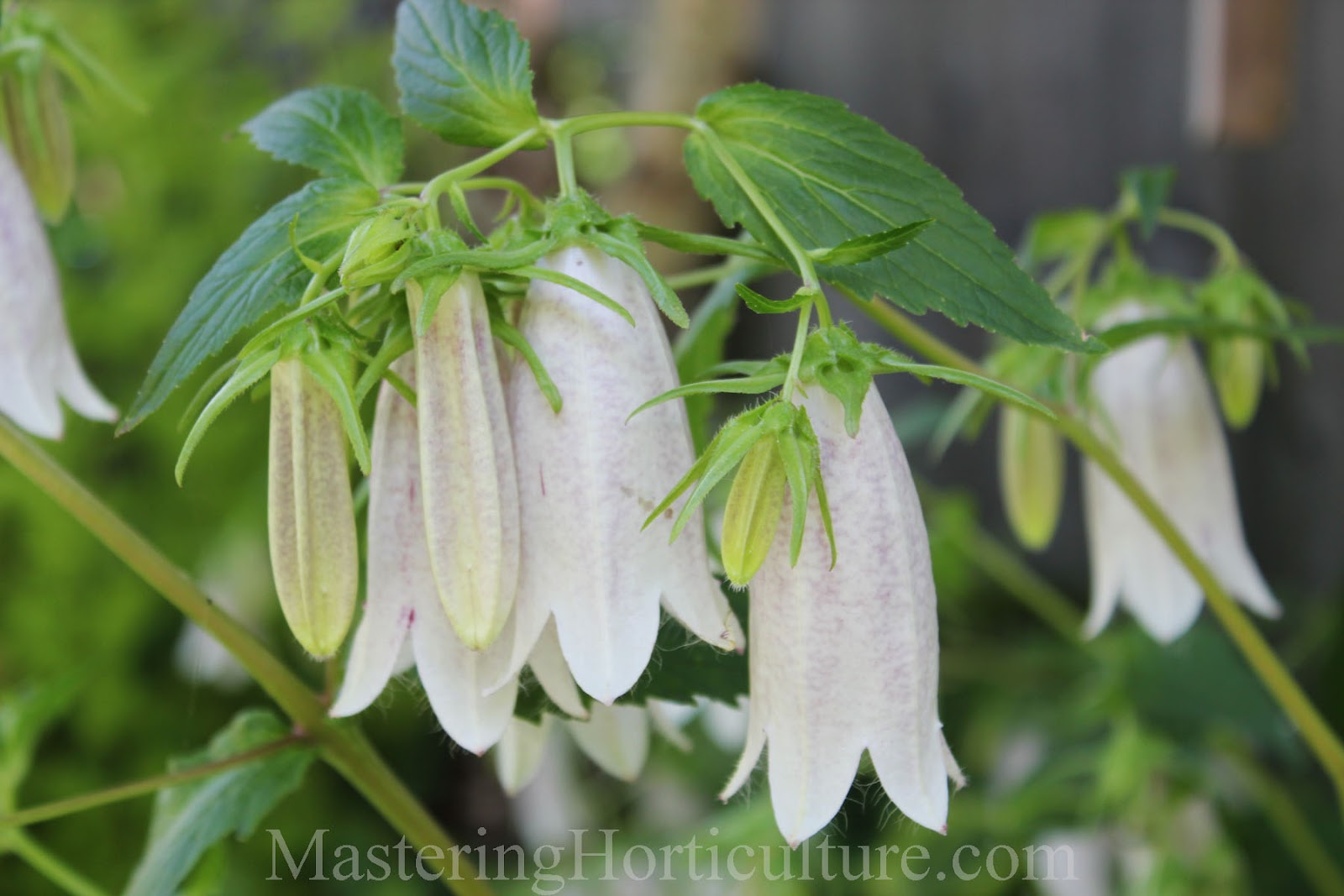
Fig. 1     Spotted bellflower (Campanula punctata)
Campanula punctata.   Bell-shaped flowers that dangled from slender stalks periodically grabbed my attention as I roamed my mother (in-law)'s country garden in Fortuna, California.  Campanula punctata (Fig. 1) has flowers (either white or pink) that are tinged with fine purplish dots which make them appear delicately translucent.  (These dots are the distinguishing characteristic of the species punctata).  The scalloped edges of the corolla are lined with delightful trichomes.  I suppose that they function, among others, to aid pollinators in reaching their desired destination. 

 
Fig.  2     Campanula punctata grows in the shade.


 Sun Exposure.   I observed that the plant was growing in both full sun and shady areas of the garden with no obvious growth difference.   When it comes to determining whether a plant is good for the shade or full sun areas, the determining factor is usually their water requirement.  When a gardener can assure that the plants get enough (not too much) water regardless of position in the garden, then the plants can perform well regardless of sun exposure.  The plant has soft tissues hence drainage is important in order to avoid rotting of the stems. 


Fig. 3      Showy display of white flowers


Growth Habit.  This perennial plant is a moderate grower and a vigorous self-seeder.  (I know this for sure because when I visited the garden a year ago, they were not there, but this time they were all over the place.)  The plant multiplies itself in two ways - creeping rhizomes and traveling seeds.  Regular division is necessary to promote good plant vigor.  In as much as blooming occurs in spring to summer, it is best to divide the plants in the fall. 

I brought home some rhizomes of this plant for my garden.  I imagined that they would look great in the shady "Down Under".  Unfortunately, the voles got to them before they had a chance to get established.  Sad.

 
There are hundreds of species in the genus Campanula; which one have you tried in your garden? 

Wednesday, June 27, 2012

Pomegranate Blossoms Lure Hummingbirds


When I planted the pomegranate tree in my backyard there was only a thought of human food.  Little did I know that the hummingbirds also had some interest in the tree.   Now that the tree is in bloom, every morning, the birds dart like fighter jets around the tree, attacking each other in order to declare ownership of this luxurious resource.  Then the successful one gets to enjoy the nectar from the bright red flowers.   

The fruit tree doubles as hummingbird attractant.  This makes the pomegranate a multitasker plant..    
 

Plants that can multitask are always desirable.

Monday, March 19, 2012

Abutilon

Fig. 1      Abutilon x hybridum - solitary and pendent flower. (February 15, 2012)


New Plant for My Garden
Last fall, I bought a foot-tall blooming Abutilon plant from the Farmer's Market in Placerville. Winter is almost over and the same plant remains blooming and seemingly unrelenting (Fig.1). The plant has flower buds that come out wrapped in a blackish red calyx (Fig. 2) which eventually opens into a bell-shaped pendent flower with overlapping dark scarlet petals and even a red peduncle (Fig. 1).
Twelve years ago when there were no tall trees in my backyard, I planted my first Abutilon and I was very pleased with its vigor. Sadly, on its third year, it began to shade some important plants round it. It had to go in favor of the other ones. But because of its desirable characteristics as a plant, I bought this new plant (Fig.1) as a replacement for the old one.


Fig. 2     Unopened Abutilon flower


About Abutilon
Common names include: Flowering maple; Parlor maple; Indian mallow; Chinese lantern, etc.  They are closely related to Hibiscus (Malvaceae family).  They are occasionally referred to as "maple" because of the resemblance to the actual maple trees in the shape of the leaves being palmate.  

Abutilons are evergreen small trees that can grow up to about eight feet tall. They are fast growing  plants. Given the right conditions they can reach their potential height on the second year.   They bloom almost year round in our area. Of the numerous varieties, the most popular ones bear solitary and pendent flowers like the one I have now (Fig. 1 and Fig.2). There are some that bear flowers in panicles - dangling like their solitary counterparts.   Green Acres, the mega nursery in the area, currently offers a wide selection of Abutilon.

 
Tips in Growing Abutilon

1.  Microclimate.   Abutilons like places with a lot of light up a point when temperature interferes with its growth.  In hot and dry areas like here near the Sacramento area, the plant prefers to grow in a sheltered south-facing location.  Afternoon shade helps reduce excessive transpiration and scorching of the flowers.  On the other hand, in places with cooler temperatures and more rains, full sun would work well.  Always remember to garden with microclimate instead of the generic recommendations for your plants.

2. Fertilization.  Being fast-growing and ever-blooming,  the plant benefits from adequate fertilization.  Phosphorous fertilization during the first and second year of growth ensures a strong root system.  If it is grown in a container then regular application of a slow release balanced fertilizer is more important than those planted in the ground.  The plant is responsive to fetilization as much as it is expressive of nutritional deficiency.  Chlorosis is the first sign of nitrogen deficiency but make sure that it is not caused by insufficient or excessive watering.  In general, I withhold fertilization starting in late fall to allow my evergreen plants to rest a little. 

3.  Pruning.  The plant may be pruned to regulate its shape and size. In the spring it is best to prune the tree, removing all branches that have died during the previous season, before the temperatures warm up.  Pruning may be done anytime to remove branches that stick out of place and also to encourage branching for a fuller shrub. 
   
Abutilon: evergreen and ever-blooming perennial for the protected sunny location in the garden.

Monday, January 16, 2012

Brugmansia sanguinea: Toxic Angel

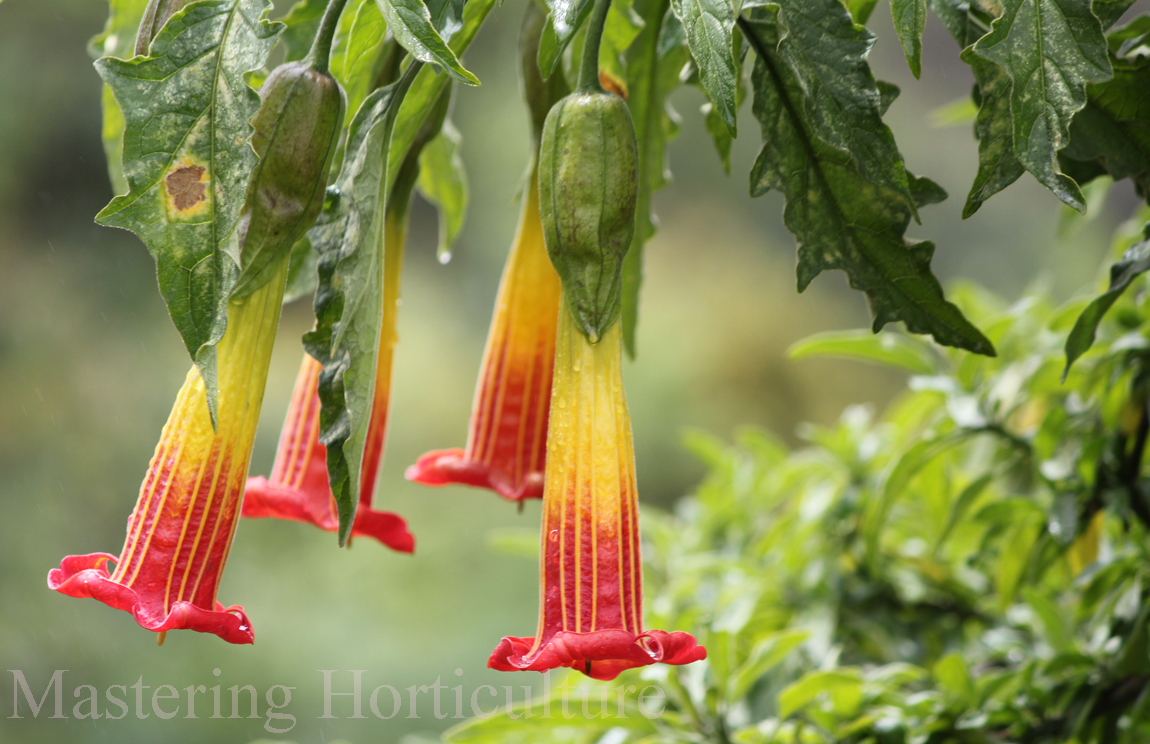
 Fig. 1  Brugmansia sanguinea 'Red Angel's Trumpet' Flower

Last year I got the chance to get really close to another angel's trumpet, the Brugmansia sanguinea.  The term sanguinea which is derived from the Latin word for blood (sanguis) describes the color of the corolla tube.  The color red distinguishes this plant from the species within the genus Brugmansia. 

These are the seven known species of Brugmansia according to the International Brugmansia and Datura SocietyBrugmansia arborea; Brugmansia aurea; Brugmansia insignis; Brugmansia sanguinea; Brugmansia suaveolens; Brugmansia versicolor; and Brugmansia vulcanicola.  They are native to South America along the Andes Mountains from Colombia to Chile. 

 
Fig. 2   Brugmansia sanguinea: The Corolla

Native environment. 
The flowers in the pictures here were all taken in Bogota, Colombia.  (My family visited one of the tourist attractions in Bogota - the  Mount Montserrate which can be reached by an aerial tramway or a funicular.) To give you an idea of environment there - Bogota is located somewhere along the equator with an elevation of about 10,300+ ft. above sea level.  The place is in the tropics but it feels like San Francisco, California.  Also, because it is located along the equator, the daylength is always the same throughout the year.  In other words the climate there is unexpectedly and consistently mild. 


Fig, 3    Brugmansia sanguinea - Pendant flowers

 
Fig. 4   Brugmansia sanguinea flowers are used as some sort of offering.

Toxic Angel.  The pendant flowers of the Brugmansia (Angel's Trumpet) are delightfully inviting but never forget that the plant is deadly. I have warned readers about the toxic contents of Brugmansia a while back.  I was shocked (not because of propriety but of safely) to see some pilgrims visiting the church at the top of  Montserrate, pick these flowers from the surrounding gardens and lay them down at the different stations of the cross (Fig.4).

Cursed Devil.   While Brugmansia is considered an angel (as in Angel's trumpet), she has a cousin who has fallen into the dark side.  Datura, aka Devil's Trumpet, is so closely related to Brugmansia that formerly they were classified under the same genus. That has changed.

These two relatives can be identified from each  other, firstly, by the position of their flowers.  Angel's trumpet hangs like pendant looking down to earth (Fig. 1) while Devil's Trumpet, looks up to the heavens as if asking forgiveness.  As the story goes, the devil was once an angel himself.  Secondly, Brugmansia is a woody plant (in a tree) while Datura is often an annual (herbaceous) and sometimes, depending on species and growing conditions,  a short-lived perennial.
It is well established that Datura, just like Brugmansia, is highly poisonous.  Careful handling of this plant is highly recommended. 

At 10,300+ ft elevation, Mount Montserrate has a tropical yet mild climate.

I've heard a European shepherd once say that it is alright to have wolves around his flock as long as he sees the wolves first before they see him.  The problem is when the wolves see him first - then it is too late.  Likewise, it better to know the dangers Brugmansia has before it tells you so.   

Monday, December 5, 2011

Cyclamen Exhibits Parental Instinct

Fig.1  The long flower stalks of cyclamen (Cyclamen persicum) curl downwards as the fruit develops.

About a year ago, I wrote something about the mystery of the cyclamen flower.  It has been my observation that the cyclamen flower is very fascinating.  At that time, I thought that the reflexing of the petals was all there was to it.   And yet as I continued to watch this plant I observe that the plant is in a serious business of ensuring a successful reproduction. Firstly,  all the petals reflex up when the flowers open to expose the androecium (pollen-producing parts) and gynoecium (ovule-producing parts). This is nature's way of promoting effective pollination.  Secondly, after pollination, the mystery continues as the plant tries to ensure that the seeds will eventually emerge into new plants.


Fig,. 2    The fruits are tucked under the leaves to mature.

Tucked Under the Leaves.  When pollination has occurred and petals have dropped, the long flower stalk arches down (Fig. 1) to an almost perfect circle (the fruit almost touching the base of the plant)(Fig.2) as if to hide the fruits safely under the leaves.  In the case of other species (Cyclamen coum, Cyclamen graecum, and Cyclamen rohltsianum), the stalks coil down  The seeds under the leaves are protected from seed-eating birds or larger pests.   The foliage of the plant also provides a suitable microclimate for the seeds to grow.  Studies have shown that, there are three primary requirements for successful cyclamen seed germination: 1) absence of light; 2) adequate temperature; 3) constant water supply.  The thick and overlapping foliage of my plants inside pots provided all three requirements adequately as evidenced by the emergence seedlings (Fig. 3).

Fig.3    Cyclamen seedlings growing at the base of the plant.

New Life Begins.   At the base of the plant, the fruits matured and seeds dropped  as directed by nature.  When I saw seedlings growing under the leaves (Fig, 3) I was reminded of chicks taking refuge under the wings of the mother hen.

I am excited to have these seedlings and am curious to see what happens to them.   It is my intention to transplant some of them and leave some to grow where they are.    I wonder if these young seedlings are also equipped with yet another behavior that would allow them to make their way out from under the overlapping leaves of the mother plant.


Winter Plant.  At this time, my cyclamen plants are poised to bloom.  New flower buds are emerging like snake heads from the base of the plants (Fig. 3).  The patterned heart-shaped leaves (Fig.1) make the Cyclamen persicum an interesting plant even before the flowers come out. 

Cyclamen is not only an outstanding parent but also a striking winter and spring plant.

Sunday, April 10, 2011

Beauty and Function


My flowering crabapple tree (Malus floribunda) is in bloom again.   Every year this tree reserves a two-week period when it becomes the center of interest in my yard.   During this time the tree is an explosion of pink inflorescence that attracts so many pollinators.  From a close distance one could hear the buzzing of bees all over the pink canopy of the tree. 

Profuse flowers come in succession which makes this tree and important pollenizer for the 'Fuji' apple which blooms about ten days later. 

 
Dark pink flowers come out from the main trunk of the tree. 

 
Leaves starting to increase their coverage.


Flowers at different stages on the same branch.


The flowering crabapple tree is both beautiful and useful as pollenizer and shade tree.

Wednesday, March 30, 2011

Japanese Maple: Flower Action


Fig. 1  Acer palmatum 'Bloodgood'   leafing and flowering. (March 26, 2011)
Japanese maple (Acer palmatum) is valued for its beautiful leaves and desirable form as a tree.  Different varieties come in different colors, shape of leaves and growth habit.   In early spring, the leaves and flowers come out at the same time.  Depending on weather conditions, the canopy cover grows so fast that the flowers go unnoticed until the samaras increase in size to be noticeable.  
 
Although the wind was still gusty after the storm, I went out in between rain showers.  I thought that I'd take pictures of the Japanese maple trees in my backyard with special emphasis on the developing flowers.
 

Fig. 2    Clusters of small flowers mimic the color of the new branches and leaves.

Fig. 3    Current year's branches coming out of older trunks.

Fig. 4    Red flowers are borne on the ends of the previous year's branches.
 

Fig. 5     Acer palmatum  dissectum 'Viridis' with drooping branches.
 
Fig. 6    Propped-up branch for a peek of the flower buds.

 Fig. 7   The four-year old Japanese maple do not have flowers as of this year.

 
My observations:
  1. Flowers are borne on new growths of the previous year's branches (Fig.1 and 4)
  2. Branches arising from old woody trunks do not flower on the first year (Fig. 3).
  3. Japanese maple grown from seeds takes several years (at least more than 4 years) before they flower (Fig. 7).
Plants growth is defined by nature's parameters - our role as gardeners is to figure them out.

Saturday, February 19, 2011

Cymbidium: Factors Contributing to Improved Blooming

The flowers beginning to open.

This green cymbidium which I called Cymbidium California 'Sun Acres' is blooming like crazy right now.  There are five spikes arising from one plant; each spike bearing at least 12 to 16 flowers.  Compared to last year when the same plant showed only one spike with seven flowers, this year's flower yield is dramatically more.  The difference in the vigor of the plant could be attributed to the following factors:

1.  Age.  The plant has grown more since last year.  In orchids shoots and pseudo-bulbs result in more flower spikes.

2.  Fertilizer.  Complete fertilizer was applied twice during the growing season.   This orchid is responsive to fertilization both in terms of growth (shoots) and flowering (spikes).

3.  Light.  The plant has been placed in an area (south-facing) where it was getting sunlight as opposed to the previous year when (because of my lack of know-how) I kept the cymbidiums in the most shady part of the garden.

4.  Orchid mix and Room to grow.  The plant was transferred into a bigger pot with new and fresh orchid mix that I formulated. The formula seemed to work and the increased pot sizes probably increased root growth. 

4.  Differential temperature.  This is the difference between the maximum (day) temperature and the minimum (night) temperature that the plant is exposed to.  Flower initiation in cymbidium is mostly a function of differential temperature. Depending on variety or species, 10-20 degree-difference is required before flower initiation begins.  The current southern-exposure location provided a longer time for the plant to be exposed to a sharper differential temperature.  One reason why cymbidiums kept indoors do not bloom is that the growing temperatures are kept almost constant. 

5.  Visibility and Proximity.  As they say, "out of sight out of mind", plants that are not seen often tend to be less cared for. The cymbidiums were moved into an area next to the back door where I could see them while doing the dishes.  Seeing them reminds me more often to attend to their needs (water and fertilizer).  Although the plant is tolerant to some degree of harsh growing conditions, it responds positively when environmental stresses are alleviated before they reach critical stage.  


Cymbidium is an outdoor orchid; for optimum flowering, treat it as an outdoor plant.  


Related Posts with Thumbnails