Thursday, January 19, 2012

Hibernaculum

Brown garden snails (Cantareus aspersus/Cornu aspersum)  in a hibernaculum - Irvine, California.

Hi.ber.nac.u.lum
Origin:  Latin word hibernare
Literal meaning:   winter residence
 Practical meaning:  a protected space that animals use as a shelter
for hybernation during prolonged periods of inclement weather.

Gardeners, what do you do when you see a population of snails in a hibernaculum?  

Monday, January 16, 2012

Brugmansia sanguinea: Toxic Angel

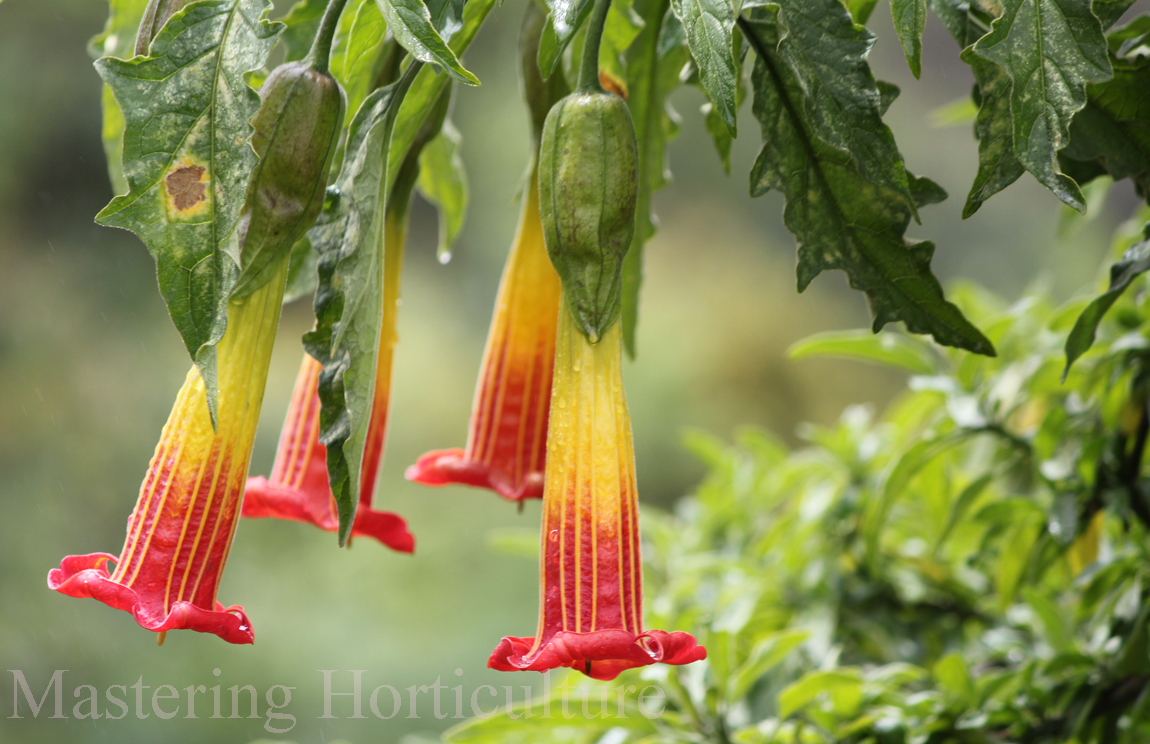
 Fig. 1  Brugmansia sanguinea 'Red Angel's Trumpet' Flower

Last year I got the chance to get really close to another angel's trumpet, the Brugmansia sanguinea.  The term sanguinea which is derived from the Latin word for blood (sanguis) describes the color of the corolla tube.  The color red distinguishes this plant from the species within the genus Brugmansia. 

These are the seven known species of Brugmansia according to the International Brugmansia and Datura SocietyBrugmansia arborea; Brugmansia aurea; Brugmansia insignis; Brugmansia sanguinea; Brugmansia suaveolens; Brugmansia versicolor; and Brugmansia vulcanicola.  They are native to South America along the Andes Mountains from Colombia to Chile. 

 
Fig. 2   Brugmansia sanguinea: The Corolla

Native environment. 
The flowers in the pictures here were all taken in Bogota, Colombia.  (My family visited one of the tourist attractions in Bogota - the  Mount Montserrate which can be reached by an aerial tramway or a funicular.) To give you an idea of environment there - Bogota is located somewhere along the equator with an elevation of about 10,300+ ft. above sea level.  The place is in the tropics but it feels like San Francisco, California.  Also, because it is located along the equator, the daylength is always the same throughout the year.  In other words the climate there is unexpectedly and consistently mild. 


Fig, 3    Brugmansia sanguinea - Pendant flowers

 
Fig. 4   Brugmansia sanguinea flowers are used as some sort of offering.

Toxic Angel.  The pendant flowers of the Brugmansia (Angel's Trumpet) are delightfully inviting but never forget that the plant is deadly. I have warned readers about the toxic contents of Brugmansia a while back.  I was shocked (not because of propriety but of safely) to see some pilgrims visiting the church at the top of  Montserrate, pick these flowers from the surrounding gardens and lay them down at the different stations of the cross (Fig.4).

Cursed Devil.   While Brugmansia is considered an angel (as in Angel's trumpet), she has a cousin who has fallen into the dark side.  Datura, aka Devil's Trumpet, is so closely related to Brugmansia that formerly they were classified under the same genus. That has changed.

These two relatives can be identified from each  other, firstly, by the position of their flowers.  Angel's trumpet hangs like pendant looking down to earth (Fig. 1) while Devil's Trumpet, looks up to the heavens as if asking forgiveness.  As the story goes, the devil was once an angel himself.  Secondly, Brugmansia is a woody plant (in a tree) while Datura is often an annual (herbaceous) and sometimes, depending on species and growing conditions,  a short-lived perennial.
It is well established that Datura, just like Brugmansia, is highly poisonous.  Careful handling of this plant is highly recommended. 

At 10,300+ ft elevation, Mount Montserrate has a tropical yet mild climate.

I've heard a European shepherd once say that it is alright to have wolves around his flock as long as he sees the wolves first before they see him.  The problem is when the wolves see him first - then it is too late.  Likewise, it better to know the dangers Brugmansia has before it tells you so.   

Monday, January 9, 2012

Mobile vs Immobile Nutrients

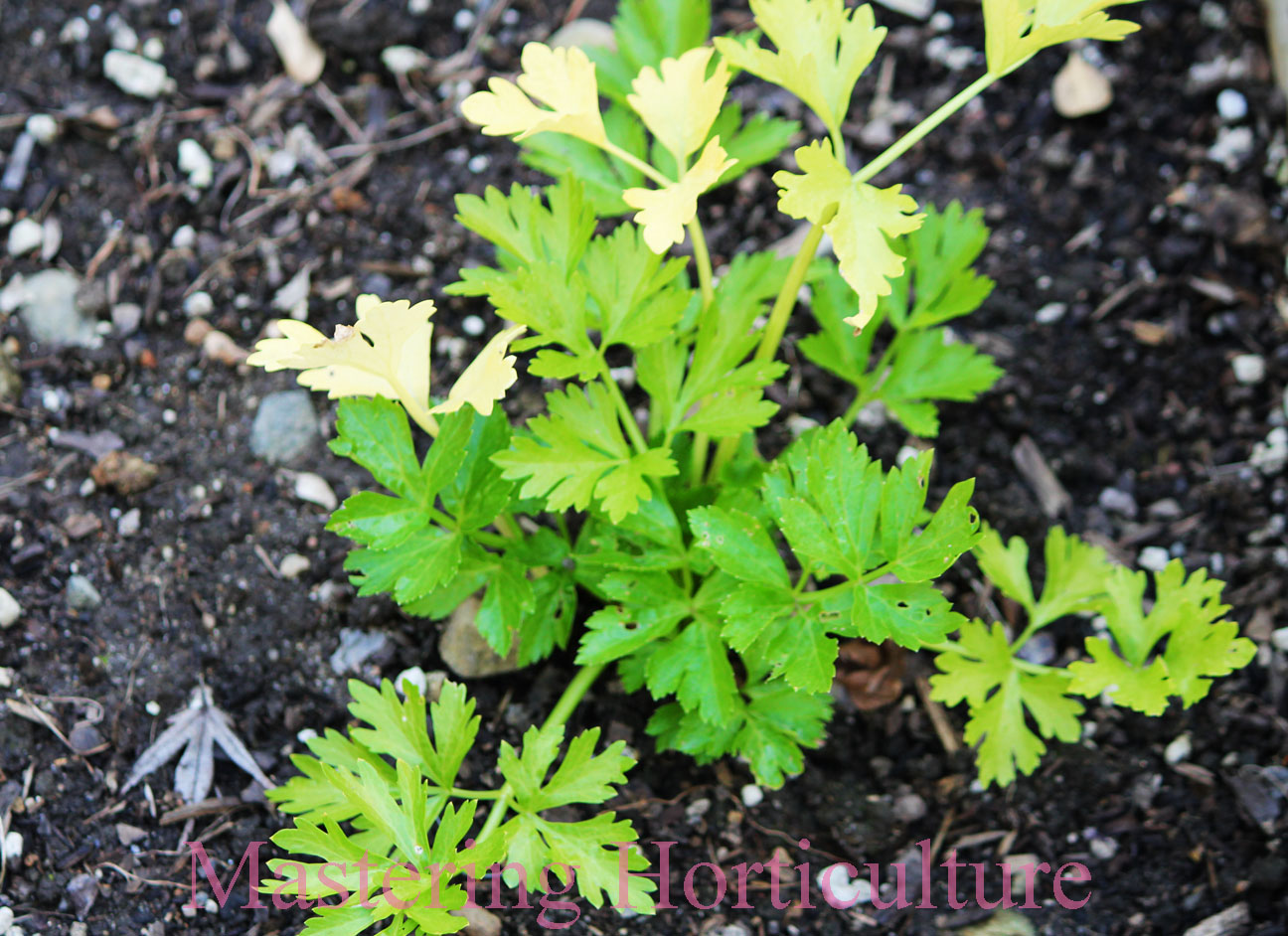
Fig. 1   Older leaves on celery turning yellow while the growing points in the center remain green.

The last time I looked there were seventeen known essential elements for plants.  Each element performs a specific function.  When conditions are at optimum levels we see a healthy plant, but when one or more element is deficient we see a "needy" plant.  To determine which of these various elements is lacking, one has to begin by understanding where the plant stores all its limited reserves.  Some elements are like cash - they can be used anywhere, while some are like gift cards - which can only be spent in specific stores.  Plant nutrients are either plant-mobile or plant-immobile.   Understanding these two characteristics is important because it helps gardeners interpret deficiency symptoms more accurately.

What are plant-mobile nutrients?

Plant-mobile nutrients are those that are capable of being translocated within the plant.  When a plant is deficient of these elements, the nutrient that is already within the plant will be transported to where it is needed most - the young tissues.  Deficiency symptoms of plant-mobile elements are observed on the older leaves first.  One example of a plant-mobile nutrient is nitrogen.  If nitrogen is deficient in a plant, older leaves would turn yellowish first while the newer leaves remain relatively green (Fig. 1). The plant directs the nutrient where it is most needed to prolong the life of the stressed plant.

Examples of plant mobile nutrients are nitrogen (N), phosphorous (P), and potassium (K).  Manganese and sulfur are moderately mobile

What are plant-immobile nutrients?
By now, the answer to this question is obvious.  Plant-immobile nutrients  cannot be translocated from older tissue to a new one due to the nature of the elements and sometimes other conditions.  In other words they are stuck where ever they landed the first time.   They have reached their destination.  Deficiency symptoms for these elements are observed in the young plant parts.  Calcium is an example of plant-immobile elements.  It plays an important role in cell expansion.  When calcium is deficient, the young shoots and flower buds exhibit the devastating effects.  If the condition is not corrected the shoots and bud get aborted eventually.

Examples of plant-immobile nutrients are:  Iron (Fe), Calcium (Ca), Manganese (Mn), Zinc (Zn), Copper (Cu), and Boron (B). 


Plant nutrients are like humans.  Some are always moving to where the activity is going on while others just settle where they landed the first time until they go back to the ground. 

Sunday, January 1, 2012

Adventitious Roots

Sedum reflexum 'Blue Spruce'

Profuse adventitious-rooting allows one plant to adapt under extremely dry conditons. 

May your roots be prevalent and deep.
So that you may prosper in all circumstances.
Happy New Year To All! 
~Helen

Monday, December 5, 2011

Cyclamen Exhibits Parental Instinct

Fig.1  The long flower stalks of cyclamen (Cyclamen persicum) curl downwards as the fruit develops.

About a year ago, I wrote something about the mystery of the cyclamen flower.  It has been my observation that the cyclamen flower is very fascinating.  At that time, I thought that the reflexing of the petals was all there was to it.   And yet as I continued to watch this plant I observe that the plant is in a serious business of ensuring a successful reproduction. Firstly,  all the petals reflex up when the flowers open to expose the androecium (pollen-producing parts) and gynoecium (ovule-producing parts). This is nature's way of promoting effective pollination.  Secondly, after pollination, the mystery continues as the plant tries to ensure that the seeds will eventually emerge into new plants.


Fig,. 2    The fruits are tucked under the leaves to mature.

Tucked Under the Leaves.  When pollination has occurred and petals have dropped, the long flower stalk arches down (Fig. 1) to an almost perfect circle (the fruit almost touching the base of the plant)(Fig.2) as if to hide the fruits safely under the leaves.  In the case of other species (Cyclamen coum, Cyclamen graecum, and Cyclamen rohltsianum), the stalks coil down  The seeds under the leaves are protected from seed-eating birds or larger pests.   The foliage of the plant also provides a suitable microclimate for the seeds to grow.  Studies have shown that, there are three primary requirements for successful cyclamen seed germination: 1) absence of light; 2) adequate temperature; 3) constant water supply.  The thick and overlapping foliage of my plants inside pots provided all three requirements adequately as evidenced by the emergence seedlings (Fig. 3).

Fig.3    Cyclamen seedlings growing at the base of the plant.

New Life Begins.   At the base of the plant, the fruits matured and seeds dropped  as directed by nature.  When I saw seedlings growing under the leaves (Fig, 3) I was reminded of chicks taking refuge under the wings of the mother hen.

I am excited to have these seedlings and am curious to see what happens to them.   It is my intention to transplant some of them and leave some to grow where they are.    I wonder if these young seedlings are also equipped with yet another behavior that would allow them to make their way out from under the overlapping leaves of the mother plant.


Winter Plant.  At this time, my cyclamen plants are poised to bloom.  New flower buds are emerging like snake heads from the base of the plants (Fig. 3).  The patterned heart-shaped leaves (Fig.1) make the Cyclamen persicum an interesting plant even before the flowers come out. 

Cyclamen is not only an outstanding parent but also a striking winter and spring plant.

Thursday, November 10, 2011

Guttation


Fig. 1   Droplets of water suspended on the tip of leaf blades.


Water is a key component of any life form. In every organism, water is constantly moving within the system as the transport vehicle for essential elements. Water molecules move around in response to both environmental and internal conditions.  In the case of plants when water is lacking, cells lose their turgor pressure and they behave in an austere mode - functioning to the minimum in order try to conserve all the remaining water within. On the contrary, when there is excess of water within and around the roots zone, plants behave in such a way that water is used up or released as fast as physiological processes allow. The plant system opens all water exits to the maximum because plant cells can only hold up to a certain amount of water before damage can occur. 

Fig. 2    Guttation:  Water is pushed out through hydathodes.


Excess Water. This topic is about a condition of excess water both in the soil and in the air.  Water gets absorbed by the roots and released through the leaves.  When the release-process is hindered by both sides of the system (by being saturated), the plant has to do something beyond ordinary. 

When you see your lawn in the morning glistening with drops of water suspended at the tip of every grass blade (Fig. 1 and Fig. 2),  you are seeing a case of guttation.  Guttation is simply the process when water from within the plant accumulates on the tips of the leaves.  However, in order to fully understand guttation, we need to contrast and compare aspects of this phenomenon with similar but not related occurrences.   

1.  The water droplet:  Is it the same as dew? 

During guttation, water droplets form at the apical margins of some grasses (Fig.1) or along the leaf margins of some dicots species (Fig. 3).   These droplets of water are different from dew.  Dew is the result of condensation of atmospheric moisture.  The whole surface of the leaves would be all wet.  As the temperature cools down at night and evaporation of molecules outside the leaf slows down or completely stops, root pressure builds up causing water to be pushed violently upwards in search of an exit. Guttation droplet (fluid) originates from within the plant.  Sometimes it is considered a xylem sap.  It is not pure water since it contains some amounts of minerals and sugars.

Guttation droplets form only around the leaf margin.  Dew forms on the leaf surface. 

Fig. 3  Guttation on young leaves of  a rose.


2.  The Passage Way:  Is it the Stomata? 

Some plant species are equipped with hydathodes.   Hydathodes are pore-like structures along the leaf margins that allow the exit of water from the plant in liquid form (Fig.3).  During photosynthesis, stomata open not only to allow carbon dioxide to get into the plant but it also allows the passage of water molecules.  The stomata allow the exit of water in gas form.  For that reason, although water is continuously exiting through the stomata, water is not visible on the leaf surface.  The water molecules join the atmospheric air immediately.   When the temperature is low (at night in particular), transpiration is dramatically decreased resulting in excess water in the plant system.  However this does not mean that water stops getting into the plant. 
Through osmosis, water moves from an area of weaker concentration to stronger concentration.   Because of the higher salt content of the plant sap, (difference in the salt content of the plant sap and soil moisture) water diffuses into the root xylem.   As a result, root pressure builds up - water rushes into the plant but with low temperatures, a traffic jam occurs at the stomata exit.  Fluids are then forced through the hydathodes and fluid comes out are tears along the leaf margins of some plants (Fig. 3). 

Guttation happens through a specialized structure called hydathodes.


3.  The Process:  Is it the same as transpiration? 

Transpiration is the process when the water molecules from the roots are lost into the surface of the leaves.   Imagine that inside the plant there are tiny capillary tubes, called xylem, that stretch from the roots to the leaves.  Then imagine that the tubes are filled with a single line of water molecules starting from right outside the root hair all the way up to the opening of the stomata by way of cohesion (the property of water molecules to attract the same molecules).  As the outer-most molecule escapes the stomata into the air, the next molecule takes its position and the rest follow leaving a new vacant position at the tip of the root.  So another  molecule gets in.  It's a cycle that goes on and on. There are two processes involved here:  transpiration (exit of water molecule from the stomata) and water absorption (entrance of water molecule into the plant).  Depending on the condition of the surrounding environment (temperature, relative humidity, wind velocity, light intensity) these stomata open and close to regulate transpiration.  For the plant, transpiration is an on-going process.

Guttation on the other hand is special-occasion process.  Certain uncommon conditions have to be met for guttation to occur.  Saturated soil and high soil temperature combined with high atmospheric humidity and low air temperature are the optimum conditions for guttation. This is  usually happens at night that is why we see the beads of water only in the morning.   Guttation happens only in specific plant species.  The process is only possible in plants that are equipped with enlarged specialized stomata called hydathodes.  I found an excellent picture of hydathodes in action - one can almost feel the movement of water through those openings.  The image is very helpful in understanding the process of guttation.


Guttation happens when there is excessive water in the soil and there is an absence of water loss through transpiration


Guttation is likely to occur during the night, hence the guttation droplets are seen in the mornings.


Wednesday, September 21, 2011

Summer Crops

Fig. 1    Plums (Prunus domestica 'Santa Rosa')

Summer seems like a paradoxical blessing for the gardener.  While it is the time when the sun-induced plants put on their best performances to wow the gardener, it is also the time when the gardener finds time to leave the garden in search of a refreshing break from the work in his own garden.  It is the time when the gardener reaps the rewards of his labor.  It is also the time when fruits and vegetables are so cheap at the stores - it makes one wonder if it was ever worth the effort to grow them.  

This summer, the number of days we spent at home was less than that which we spent away from home. Whenever we came back from our trips, I was always trying to squeeze in some time to garden but then there was a huge mountain of laundry to work on. Then there were fruits to harvest and eat that we could not keep up with. So then there were fruits to can. As a result there was even less time to garden and zero time to blog.  But as the masters of the garden, we ought to choose the things we need to do. 
 
Fig. 2    Grapes (Vitis vinifera 'Pinot Nior')

Plums.  Compared to previous years, the plums (Fig.1) were late this year.  However, with our busy summer schedule, timing was perfect - the fruits were ready during a two- week-period that we were home.  So we harvested them and gave some to our friends.  I canned plum sauce - a family favorite as pancake topping. 

Grapes.  The main purpose of my grapevines is to provide shade.  In other words,  they are grown primarily for the foliage and not the fruits.  Nonetheless, we get enough fruits to make at least four quarts of jelly annually from the two Pinot noir.  We get more if we do not wait for the larger birds (blue jays and robins) to get them first.  I have one Zinfandel grapevine but it did not have fruits this year probably because it is now shaded by the ornamental pear that is planted next to it.  In spite of that, it still gives a lot of shade. 

Fig. 3   Swiss Chard (Beta vulgaris 'Rainbow Chard')

As summer approaches it end, the Swiss chards continue to  grow without any sign of bolting (flowering). They have taken a great deal of heat during the summer and I admit that I left most of the watering to the sprinkler system.  This would be totally alright but in our place there are days when the temperatures just get so hot - supplemental watering becomes necessary.  As the plants put on larger canopies,  the sprinklers need adjusting so that the water still gets to the right place.   Swiss chards proved to be tough in this climate and in my garden.  However, the leaves are decreasing in size and showing slight sign of chlorosis or yellowing (Fig.3).  I will try to prolong their production time by adding a little bit of nitrogen fertilizer.  I am curious to see which factor will stop them from growing - whether temperature, or flowering. 


Fig. 4    Radishes  (Raphanis sativus ' French Breakfast')

Radishes.  Unfortunately, we got to eat only a few radishes.  They were overgrown by the time that we had time to consume them.  I left some plants to flower just to encourage the pollinators to stick around and to allow the plants to produce their seeds for the next crop.

Fig. 5   Pears (Pyrus communis 'Bartlett')

 Pears.  We have a good crop of pears this year.  Coddling moth infestation still managed to leave  signs of their presence in some fruits but the infestation is dramatically reduced compared to that of last year.  This could be attributed to the insect trap I used in the early spring.  I believe that it would have been more effective if I had installed more than one trap per tree.  Recently, I learned that it is a good idea to have moth traps from April to September and replacing them as necessary.  I'll try that next year.   

Most of the branches are bent severely downward (Fig. 5) because of the heavy fruits.  Fortunately, the branches are pliable.  Another to-do-item is pruning the tree this fall.  So far, jars of pear butter line one of the counter tops in the kitchen - and yet we still have so many fruits hanging on the tree up to this time.

Fig. 6   Heirloom Tomato


Fig. 7    Tomato (Lycopersicon esculentum)

Tomatoes.  My tomatoes are late this year.  They are at the peak of their production now and yet autumn is here.    The heirloom tomatoes (Fig. 6)  are very sensitive to heat.  The plants basically stopped setting fruits during the hot months and are just starting to fruit again.  At this rate, there will be green tomatoes in the Thanksgiving menu. 

Apples.  The Fuji apples are almost ready.  The crabapple fruits are abscising (falling off) from the tree but I do not know what to do with them.  They are so tiny to make into anything of consequence - or am I wrong? 

Pomegranate. The pomegranate tree did not produce any fruits yet.  It's been a year since I brought it into my garden.  It flowered in early spring but the fruits did not set. 


Grow your food in the neighborhood of your kitchen. 
Related Posts with Thumbnails