Monday, February 13, 2012

Broken to Beautiful

Fig. 1     Foxtail ferns (Asparagus densiflorus 'Myers') are a common sight in my garden.

One of my favorite container plants is the Foxtail fern (Asparagus densiflorus 'Myers'). In a pot (Fig. 1), I can move them from one place to another in the yard where an instant color is needed.  Foxtail ferns develop vigorous root system along with water storage organs.   This feature makes the plant a celebrity-drought-tolerant plant.  As a container plant, however, the same vigorous roots system causes a slight draw back.  The plant gets root-bound easily.  


Fig. 2     Pressure from the foxtail fern (Asparagus densiflorus) roots broke the terra cotta pot.

The problem.  In my garden the super-powered roots of the Asparagus densiflorus defied the shape of its container pot (Fig. 2).  It is very obvious that this plant is in a desperate need of more room to grow.   Dividing the plant at this point would only mean breaking the already-broken pot.  I was not sold to this idea.

Fig. 3     Sempervivum-pups in a row.

The Solution.   I cut off some of the roots that have been dried out from being exposed through the crack - to make room for a little bit of potting soil.  Using sempervivum that are available from my garden, I planted the crack with similarly drought tolerant plants (Fig. 3).

Fig. 4   These plants (Sempervivum - hen and chicks) look like they have been there all the time.

The outcome.   The crack no longer looks like a disgrace (Fig. 4).  As soon as the temperatures get warmer, these "ever-living" runners will send their own roots into the thicket to join the foxtail fern's roots.   Today, I saw a bird trying to get peck on the new plants which tells me that a wire around the plants might be necessary for the time being. 

Finally, to avoid such thing from happening in your gardens, divide potted foxtail ferns at least every two years.  For bulbous containers like the one I used here (Fig. 2 and Fig. 4) division is even more critical because at a certain point the plant cannot be pulled out without damaging the container.    

 
A little bit of imagination can transform some problems into blessings.

Wednesday, February 8, 2012

Gardening and Microclimate

Fig. 1  Mature plant communities at Filoli Gardens.

Gardening is all about harnessing microclimate.  After so many years of studying, observing, and putting all techniques learned into practical use in growing plants, I've arrived to the conclusion that the complexity of gardening boils down to understanding microclimate.  The magnitude of the effects of genetics and management practices on the overall success of gardening can be enhanced or diminished by the immediate growing environment - microclimate.  Microclimate is the unique condition within the immediate surroundings of a given small area. It takes into account the interaction of the following factors: light (intensity, duration), temperature, wind/turbulence, moisture, soil condition, and topography.  It is affected by the presence or absence of structures such buildings, pavements, trees, slopes, orientation, and plants around the area.  
Gardening on the basis of the USDA Hardiness Zone alone is not enough.  Every gardener knows that different plants require different conditions for optimum growth.  The plants we buy from nurseries come with labels that indicate the most basic and generic condition for growth.  The terms full sun, partial sun, partial shade, shade, all suggest a preferred microclimate for the specific plant.  Some plants need direct full sunlight while others prefer attenuated sunlight light allowing them to perform best under tall trees (Fig. 1).  However, one must consider that a full sun in Seattle may not the same as that in Sacramento.  

Fig. 2  Eastern side: Growing trees and hedges affect the amount of sunlight and wind turbulence in the garden.


Microclimates in My Backyard.  Even small backyard gardens like mine have several distinct microclimates.  The eastern side (Fig. 2) of the house is a lot different from the southern side (Fig. 3).  The former gets an early but short exposure to sunlight while the latter gets a later, prolonged and higher-intensity sunlight.  At the western side of the house light reflects from the white wall and wind circulation is limited because of the close distance between the house and the fence.  The north side is still another microclimate where the sun comes only late in the afternoon.  The best performing plant on this side is the Cecile Brunner rose which has extended itself to reach the top of the roof where it can get enough sunlight  (Fig. 4).  My garden is now a lot shadier than it was twelve years ago.  The trees have matured and the place where I used to plant strawberries now gets only two hours of  dappled sunlight during a summer day.  (One good effect of the lack of sunlight is that there are no more weeds growing there.)
 
Fig. 3 Southern side of the garden.

Fig.  4  Northern side: Cecile Brunner rose
  

Fig.  5.  Location for a bench -  shade or sun?


The Bench Comparison.  In gardening, finding the right microclimate is like finding the right place for a bench (Fig. 5).  Depending on the location, one can either enjoy sitting on it or suffer.  But then again, it also depends on the goal of the person sitting on the bench.  My friend, Sue, would like her bench to be in the sun while I like it to be in the shade.  With restraint, both bench positions are good depending on the desired effect.  


 Crassula argentea 'Compacta' under two microclimates. 
Fig. 6   Grown on the eastern side of the yard.

Two years ago  I bought a compact mini jade plant (Crassula argentea 'Compacta') in a 3 inch pot.  Since then the plant has grown and been divided into two separate plants in 6" pots.  One of them (Fig. 6) was located on the east-facing side of the yard.  The other one (Fig. 7) was positioned in the south-facing side of the yard where it was exposed to prolonged direct sunlight. It was definitely hotter on this side of the yard; the soil also dried up faster than its east-facing counterpart.

Fig. 7  Grown on the the southern side of the yard.


There was a sharp contrast between the two plants when it comes to color.  More sunlight (Fig 7) resulted in yellowish leaves with very pronounced red leaf margins.  Shorter direct sunlight resulted in darker green leaves (Fig. 6).  As long as the needs of the plants are all met at the right amount, the two plants function normally but to the naked eye, microclimate within their growing area is reflected through their coloration.   These are occurrences that we so often take for granted.  But if you think about it, a gardener can actually manipulate the color of these jade plants to suit their preferences by strategically planting them in the right microclimate. 

Spring is right around the corner and planting season is here.  Make sure to re-acquaint yourself with the ever-changing microclimates around your garden.  It is the most important consideration in your choice of plants and even timing of activities in your garden.

"Sufficient knowledge of your microclimates will help you understand your gardening successes and failures."

Thursday, January 19, 2012

Hibernaculum

Brown garden snails (Cantareus aspersus/Cornu aspersum)  in a hibernaculum - Irvine, California.

Hi.ber.nac.u.lum
Origin:  Latin word hibernare
Literal meaning:   winter residence
 Practical meaning:  a protected space that animals use as a shelter
for hybernation during prolonged periods of inclement weather.

Gardeners, what do you do when you see a population of snails in a hibernaculum?  

Monday, January 16, 2012

Brugmansia sanguinea: Toxic Angel

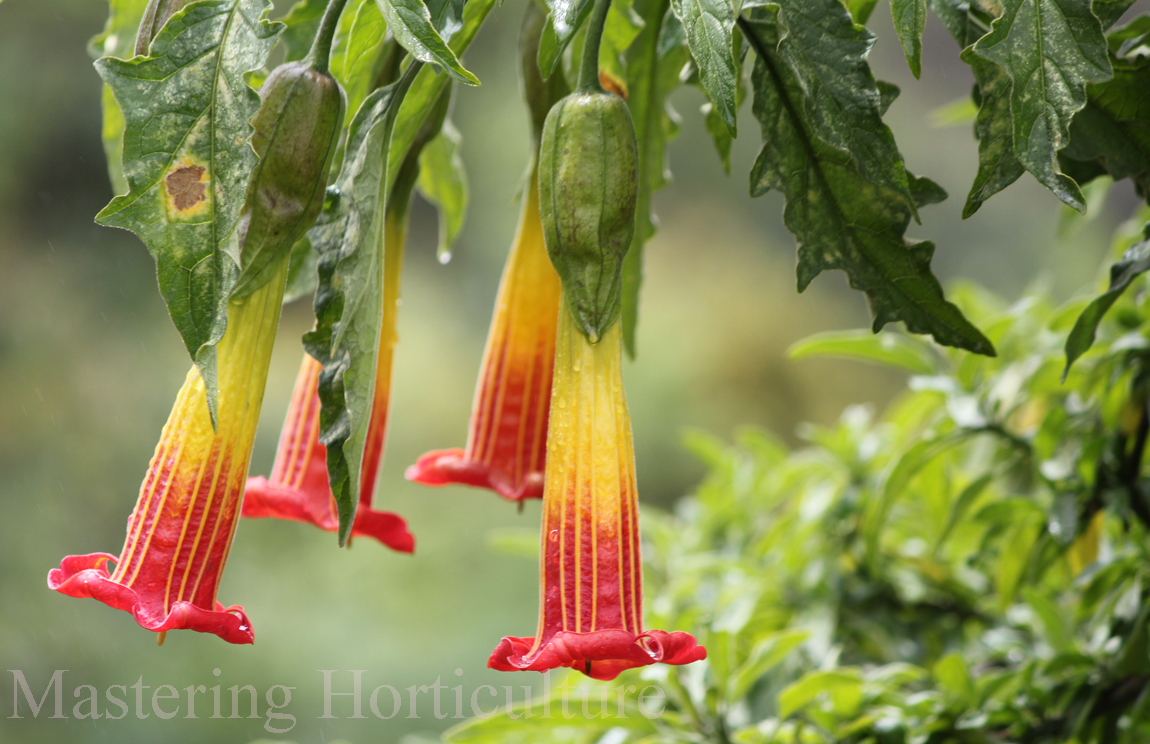
 Fig. 1  Brugmansia sanguinea 'Red Angel's Trumpet' Flower

Last year I got the chance to get really close to another angel's trumpet, the Brugmansia sanguinea.  The term sanguinea which is derived from the Latin word for blood (sanguis) describes the color of the corolla tube.  The color red distinguishes this plant from the species within the genus Brugmansia. 

These are the seven known species of Brugmansia according to the International Brugmansia and Datura SocietyBrugmansia arborea; Brugmansia aurea; Brugmansia insignis; Brugmansia sanguinea; Brugmansia suaveolens; Brugmansia versicolor; and Brugmansia vulcanicola.  They are native to South America along the Andes Mountains from Colombia to Chile. 

 
Fig. 2   Brugmansia sanguinea: The Corolla

Native environment. 
The flowers in the pictures here were all taken in Bogota, Colombia.  (My family visited one of the tourist attractions in Bogota - the  Mount Montserrate which can be reached by an aerial tramway or a funicular.) To give you an idea of environment there - Bogota is located somewhere along the equator with an elevation of about 10,300+ ft. above sea level.  The place is in the tropics but it feels like San Francisco, California.  Also, because it is located along the equator, the daylength is always the same throughout the year.  In other words the climate there is unexpectedly and consistently mild. 


Fig, 3    Brugmansia sanguinea - Pendant flowers

 
Fig. 4   Brugmansia sanguinea flowers are used as some sort of offering.

Toxic Angel.  The pendant flowers of the Brugmansia (Angel's Trumpet) are delightfully inviting but never forget that the plant is deadly. I have warned readers about the toxic contents of Brugmansia a while back.  I was shocked (not because of propriety but of safely) to see some pilgrims visiting the church at the top of  Montserrate, pick these flowers from the surrounding gardens and lay them down at the different stations of the cross (Fig.4).

Cursed Devil.   While Brugmansia is considered an angel (as in Angel's trumpet), she has a cousin who has fallen into the dark side.  Datura, aka Devil's Trumpet, is so closely related to Brugmansia that formerly they were classified under the same genus. That has changed.

These two relatives can be identified from each  other, firstly, by the position of their flowers.  Angel's trumpet hangs like pendant looking down to earth (Fig. 1) while Devil's Trumpet, looks up to the heavens as if asking forgiveness.  As the story goes, the devil was once an angel himself.  Secondly, Brugmansia is a woody plant (in a tree) while Datura is often an annual (herbaceous) and sometimes, depending on species and growing conditions,  a short-lived perennial.
It is well established that Datura, just like Brugmansia, is highly poisonous.  Careful handling of this plant is highly recommended. 

At 10,300+ ft elevation, Mount Montserrate has a tropical yet mild climate.

I've heard a European shepherd once say that it is alright to have wolves around his flock as long as he sees the wolves first before they see him.  The problem is when the wolves see him first - then it is too late.  Likewise, it better to know the dangers Brugmansia has before it tells you so.   

Monday, January 9, 2012

Mobile vs Immobile Nutrients

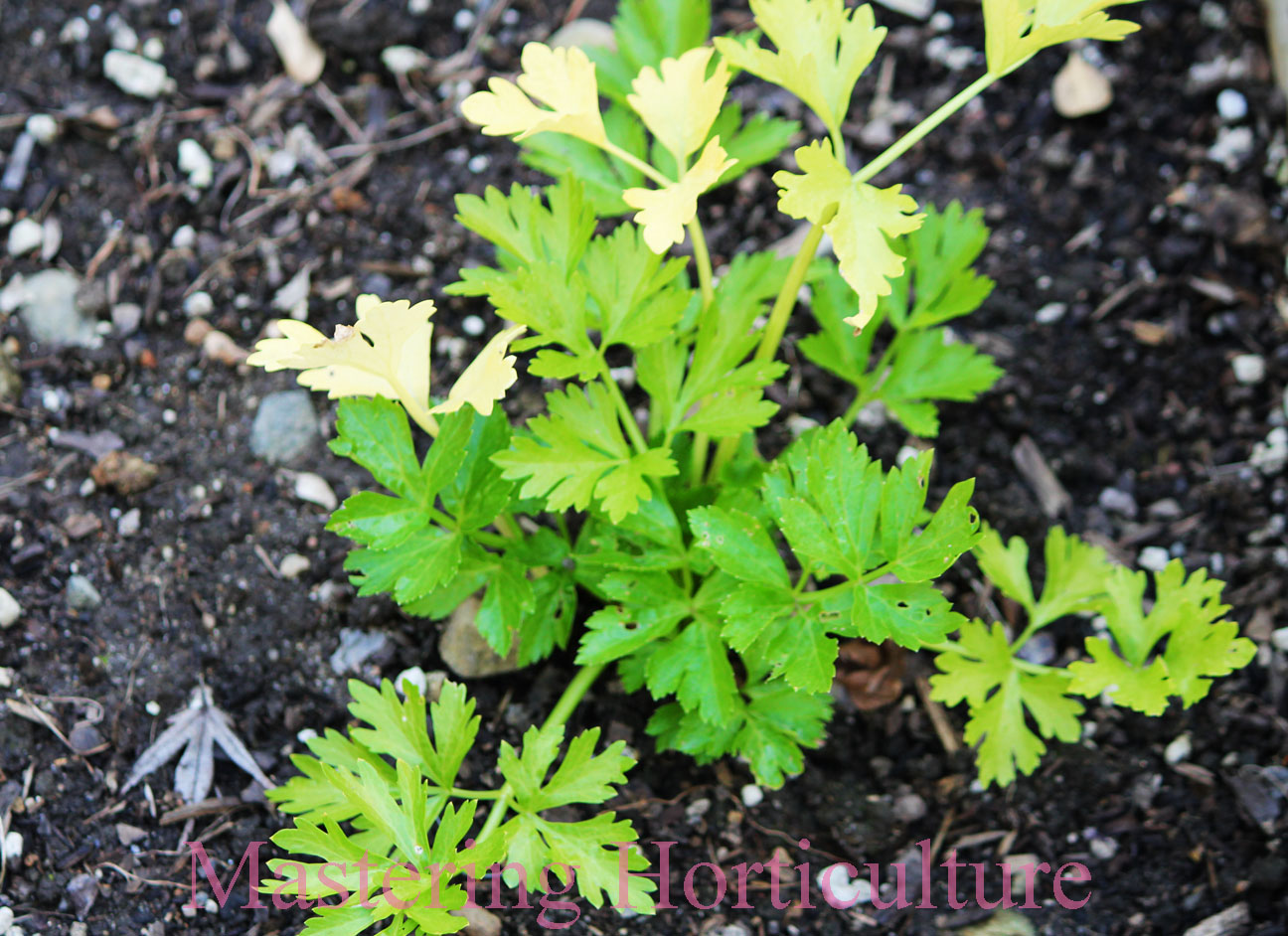
Fig. 1   Older leaves on celery turning yellow while the growing points in the center remain green.

The last time I looked there were seventeen known essential elements for plants.  Each element performs a specific function.  When conditions are at optimum levels we see a healthy plant, but when one or more element is deficient we see a "needy" plant.  To determine which of these various elements is lacking, one has to begin by understanding where the plant stores all its limited reserves.  Some elements are like cash - they can be used anywhere, while some are like gift cards - which can only be spent in specific stores.  Plant nutrients are either plant-mobile or plant-immobile.   Understanding these two characteristics is important because it helps gardeners interpret deficiency symptoms more accurately.

What are plant-mobile nutrients?

Plant-mobile nutrients are those that are capable of being translocated within the plant.  When a plant is deficient of these elements, the nutrient that is already within the plant will be transported to where it is needed most - the young tissues.  Deficiency symptoms of plant-mobile elements are observed on the older leaves first.  One example of a plant-mobile nutrient is nitrogen.  If nitrogen is deficient in a plant, older leaves would turn yellowish first while the newer leaves remain relatively green (Fig. 1). The plant directs the nutrient where it is most needed to prolong the life of the stressed plant.

Examples of plant mobile nutrients are nitrogen (N), phosphorous (P), and potassium (K).  Manganese and sulfur are moderately mobile

What are plant-immobile nutrients?
By now, the answer to this question is obvious.  Plant-immobile nutrients  cannot be translocated from older tissue to a new one due to the nature of the elements and sometimes other conditions.  In other words they are stuck where ever they landed the first time.   They have reached their destination.  Deficiency symptoms for these elements are observed in the young plant parts.  Calcium is an example of plant-immobile elements.  It plays an important role in cell expansion.  When calcium is deficient, the young shoots and flower buds exhibit the devastating effects.  If the condition is not corrected the shoots and bud get aborted eventually.

Examples of plant-immobile nutrients are:  Iron (Fe), Calcium (Ca), Manganese (Mn), Zinc (Zn), Copper (Cu), and Boron (B). 


Plant nutrients are like humans.  Some are always moving to where the activity is going on while others just settle where they landed the first time until they go back to the ground. 

Sunday, January 1, 2012

Adventitious Roots

Sedum reflexum 'Blue Spruce'

Profuse adventitious-rooting allows one plant to adapt under extremely dry conditons. 

May your roots be prevalent and deep.
So that you may prosper in all circumstances.
Happy New Year To All! 
~Helen

Monday, December 5, 2011

Cyclamen Exhibits Parental Instinct

Fig.1  The long flower stalks of cyclamen (Cyclamen persicum) curl downwards as the fruit develops.

About a year ago, I wrote something about the mystery of the cyclamen flower.  It has been my observation that the cyclamen flower is very fascinating.  At that time, I thought that the reflexing of the petals was all there was to it.   And yet as I continued to watch this plant I observe that the plant is in a serious business of ensuring a successful reproduction. Firstly,  all the petals reflex up when the flowers open to expose the androecium (pollen-producing parts) and gynoecium (ovule-producing parts). This is nature's way of promoting effective pollination.  Secondly, after pollination, the mystery continues as the plant tries to ensure that the seeds will eventually emerge into new plants.


Fig,. 2    The fruits are tucked under the leaves to mature.

Tucked Under the Leaves.  When pollination has occurred and petals have dropped, the long flower stalk arches down (Fig. 1) to an almost perfect circle (the fruit almost touching the base of the plant)(Fig.2) as if to hide the fruits safely under the leaves.  In the case of other species (Cyclamen coum, Cyclamen graecum, and Cyclamen rohltsianum), the stalks coil down  The seeds under the leaves are protected from seed-eating birds or larger pests.   The foliage of the plant also provides a suitable microclimate for the seeds to grow.  Studies have shown that, there are three primary requirements for successful cyclamen seed germination: 1) absence of light; 2) adequate temperature; 3) constant water supply.  The thick and overlapping foliage of my plants inside pots provided all three requirements adequately as evidenced by the emergence seedlings (Fig. 3).

Fig.3    Cyclamen seedlings growing at the base of the plant.

New Life Begins.   At the base of the plant, the fruits matured and seeds dropped  as directed by nature.  When I saw seedlings growing under the leaves (Fig, 3) I was reminded of chicks taking refuge under the wings of the mother hen.

I am excited to have these seedlings and am curious to see what happens to them.   It is my intention to transplant some of them and leave some to grow where they are.    I wonder if these young seedlings are also equipped with yet another behavior that would allow them to make their way out from under the overlapping leaves of the mother plant.


Winter Plant.  At this time, my cyclamen plants are poised to bloom.  New flower buds are emerging like snake heads from the base of the plants (Fig. 3).  The patterned heart-shaped leaves (Fig.1) make the Cyclamen persicum an interesting plant even before the flowers come out. 

Cyclamen is not only an outstanding parent but also a striking winter and spring plant.
Related Posts with Thumbnails