Sunday, September 2, 2012

HortiCOOLture - Armored Plant

Fig. 1   The bizarre porcupine tomato (Solanum pyracanthum).


Ornamentally Odd
When all the basic plants are in place in the garden, an oddity here and there is in order.  This week our local nursery is offering a plant that would fit the bill.  The "Porcupine tomato" botanically known as Solanum pyracanthum (Fig. 1) is a plant that is armored with spikes all over. 

In spite of being prickly, some ornamental features can be attributed to this plant.  The bright orange spikes provide a pleasing textural and color contrast against the bluish green velvety leaves (Fig. 2).  The royal purple petals are complemented by protruding yellow stamens in the middle.   Eventually, small cherry-tomato-like fruits will take the place of the colorful flowers. A plant with such attributes definitely makes a statement in any garden.


Fig. 2   Dagger-like spikes on land under leaves of Solanum pyracanthum


Physical and Chemical Threat
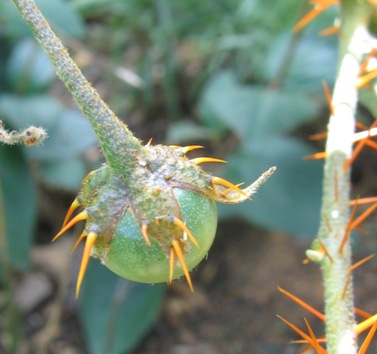
This may be an ornamental shrub but the plant is definitely for your eyes only. The velvety green leaves may look soft and friendly but the dagger-like spikes (Fig. 2) that are spread all over the plant  make the plant look utterly foreboding.   I would not recommend this plant near playground areas.  The quills would deter any one from touching the plant but the danger does not end there.  The plant is known to contain various toxic substances on the leaves, stems and fruits - just like most solanaceous (night shade) plants.   Because of this, it is not clear whether the spikes were meant to protect the plant from humans and animals or vice versa


Fig. 3  Solanum pyrachantum flower.
 
porcupine tomato
 Fig. 4   Armored fruit of Solanum pyrachantum. (Photo from Rob's Plants)
 
 
Threat of Invasion
The plant is drought tolerant therefore caution should be observed when it comes to cultivating this plant since it can be invasive depending on the growing conditions.  The fruits are loaded with seeds which when allowed to mature and fall on the ground will result in an explosion of new seedlings.  Eradicating an army of plants like this, would involve a bloody battle.  :)  


 Solanum pyrachantum, although related to food crops like potato, tomato and eggplant, has been cultivated solely as ornamental plant.  And we will keep it that way! 

Thursday, August 2, 2012

Plums for the Season

Santa Rosa plums (Prunus domestica 'Sana Rosa').

Baskets of dark ripe plums have always been one of the defining marks of summer in our home.  In some years we need smaller baskets than others, but there never was a year when we did not have plums ever since we planted the tree.  Traditionally, I would preserve enough plum sauce for us and our extended family.  This year, I did not get to do any canning (except for a couple jars of plum syrup) which I hurriedly make on the day we left for Taiwan.  It was a good thing that our friends from church came to pick them while we were gone - at least the fruits were consumed and not wasted.


One week before harvest.

Towards the southern side of the plum is a mulberry tree which is growing at a very fast rate. It will have to be trimmed if not pollarded so as not to jeopardize the productivity of the plum. 

 
My daughter is perched on the mulberry tree.

 
The garden presents a never-ending list of opportunities and challenges that varies from season to season.  The gardener may never master the garden but with persistence, every experience is an added arrow into his quiver.

Sunday, July 29, 2012

Edibles in Bloom

Fig. 1   Thai Basil (Ocimum basilicum)

This is a partial glimpse of my vegetable garden this year.  Instead of showing the fruits, I chose to focus on the flowers.  Flowers are generally the early indicators of a forth coming harvest for any food crop.  For some plants such broccoli and cauliflower, the flower directly translates to the crop yield. Still for other annual plants where the leaves are the harvestable parts, flower initiation marks the cessation of productivity. 

Fig. 2    Cilantro (Coriandrum sativum)

Basil
Basil and cilantro (Fig. 2) are among of my favorite herbs of all times.  Basil is generally a summer crop and a long-day plant, which means that it flowers when the daylength (photoperiod) is longer than 12 hours per day. Thai basil (Fig. 2) is particularly sensitive to increasing photoperiod - the seedlings almost always have flowers when I buy them from the nursery.  For a plant where the leaves are the harvestable/edible part, this poses a problem.  However, that is when management comes into play.  It is my practice to  decapitate my basil plants at the slightest hint of flowering in order to induce branching and prolong vegetative growth. 

Fig. 3    Meyer Lemon (Citrus x meyeri)
Citrus
The 'Meyer' lemon seems to be enjoying its current location (Fig. 3).  When my father-in-law and his wife could not get it to fruit in their shady front yard, they gave it to me - knowing that we have the sun here.  So far it is looking good. 'Meyer' lemon, which is believed to have originated from China, is different from the true lemons such as 'Eureka', 'Lisbon', and 'Ponderosa' in that it is sweeter and less rindy (thinner rind).  Such characteristics are attributed to a genetic relationship to the Mandarin orange.
Now there are two types of lemons in my backyard.  I have yet to succeed in growing the Filipino lemon - Kalamasi (Citrus microcarpa).  


Fig. 4     Celery (Apium graveolens)

Celery
Last winter I planted a row of celery (Fig. 4).  It was great to have something green in the garden during the dead months of winter.  It was but we could not use it all up.  I left the plants to flower to encourage the pollinators to linger around.
   
Every gardener in our area would be interested to know that celery is deer resistant.  But then again - as I always say when people ask me whether a plant is deer resistant or not - it all depends on how hungry the deer are. 


Fig. 5    Italian Sweet Pepper (Capsicum annuum)

Fig. 6     Phaseolus vulgaris

Beans
Not all good things are meant to be for the gardener. I planted beans and watched them grow all the way to flowering (Fig. 6). One morning after I took the picture above, all those plants were defoliated. Everything above ground was gone except for the stems. To say that I almost cried is an understatement. The voles are here and they are destructive! Some say that voles come every three years; 2012 appears to be third year. Sadly, we'll have no beans this summer.

Fig. 7   Thai Pepper (Capsicum annuum)

Fig. 8     Fingerling Potatoes (Solanum tuberosum)

Potatoes 
From last year's harvest, I saved the really small tubers and planted them in early spring.  If it is still true that the condition of the foliage (Fig. 8) is an indication of what lies underground, then these spuds must be hiding some gold in the ground.  Unless, of course, my enemies (voles) have dig a secret tunnel to get to the tubers.  

Fig. 8     Tomatillo (Physalis philadelphica)
Tomatillo
This is my first time growing tomatillo.  So far the plant is doing what it is supposed to.  Flowers hang from the branches but there has been no sign of fruit as of this time.  I keep my fingers crossed on the possibility of homemade salsa verse. 

What's flowering in your edible garden today?

Saturday, July 14, 2012

Spotted Bells

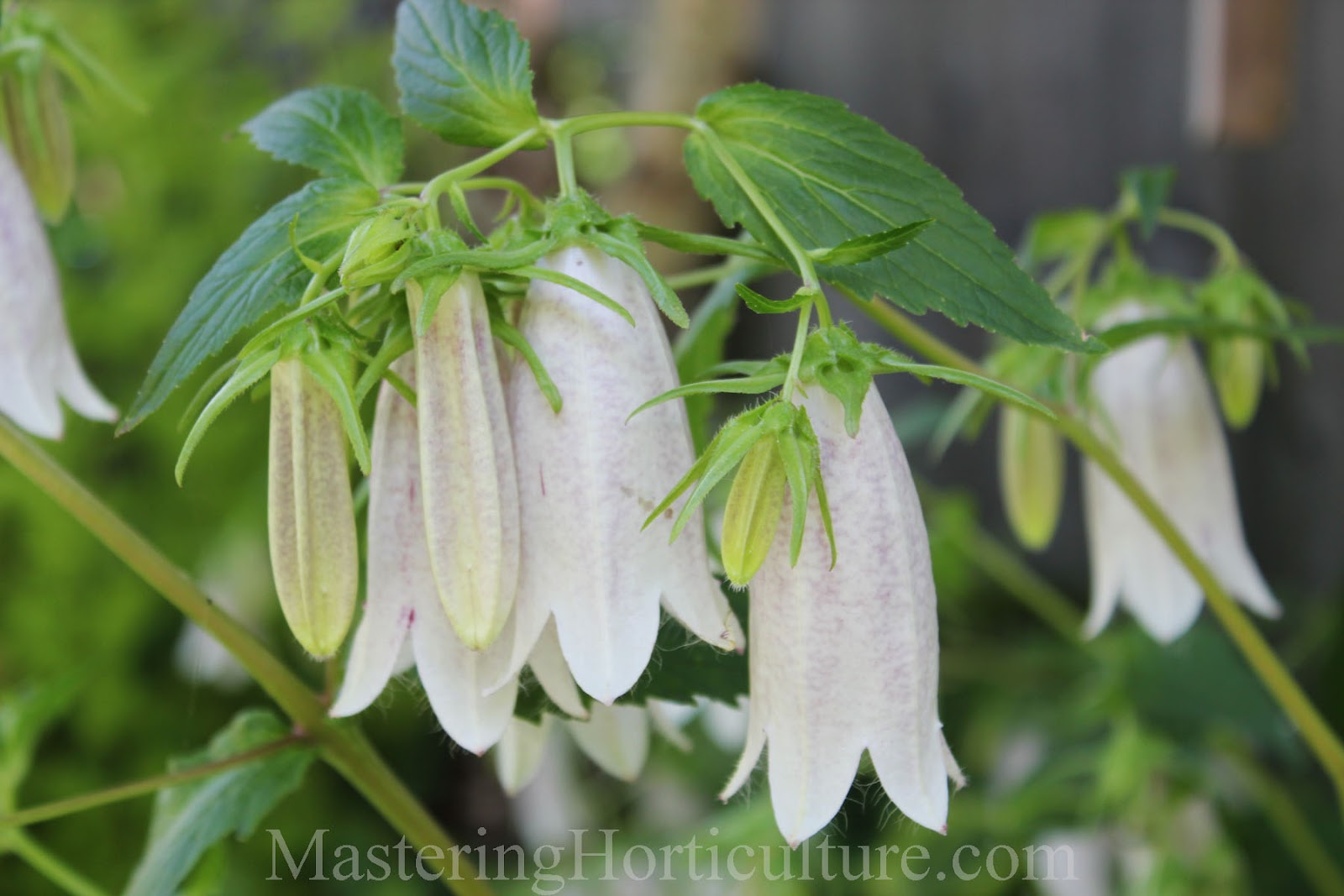
Fig. 1     Spotted bellflower (Campanula punctata)
Campanula punctata.   Bell-shaped flowers that dangled from slender stalks periodically grabbed my attention as I roamed my mother (in-law)'s country garden in Fortuna, California.  Campanula punctata (Fig. 1) has flowers (either white or pink) that are tinged with fine purplish dots which make them appear delicately translucent.  (These dots are the distinguishing characteristic of the species punctata).  The scalloped edges of the corolla are lined with delightful trichomes.  I suppose that they function, among others, to aid pollinators in reaching their desired destination. 

 
Fig.  2     Campanula punctata grows in the shade.


 Sun Exposure.   I observed that the plant was growing in both full sun and shady areas of the garden with no obvious growth difference.   When it comes to determining whether a plant is good for the shade or full sun areas, the determining factor is usually their water requirement.  When a gardener can assure that the plants get enough (not too much) water regardless of position in the garden, then the plants can perform well regardless of sun exposure.  The plant has soft tissues hence drainage is important in order to avoid rotting of the stems. 


Fig. 3      Showy display of white flowers


Growth Habit.  This perennial plant is a moderate grower and a vigorous self-seeder.  (I know this for sure because when I visited the garden a year ago, they were not there, but this time they were all over the place.)  The plant multiplies itself in two ways - creeping rhizomes and traveling seeds.  Regular division is necessary to promote good plant vigor.  In as much as blooming occurs in spring to summer, it is best to divide the plants in the fall. 

I brought home some rhizomes of this plant for my garden.  I imagined that they would look great in the shady "Down Under".  Unfortunately, the voles got to them before they had a chance to get established.  Sad.

 
There are hundreds of species in the genus Campanula; which one have you tried in your garden? 

Monday, July 9, 2012

Visiting the World Vegetable Center

AVRDC (Asian Vegetable Research and Development Center)

At last I made it to AVRDC - The World Vegetable Center!  Coming to this place has been a long dream especially when I was working as a plant scientist in the Philippines.  Hence, this is a dream come true!
My family was given an exclusive seminar by Maureen Mecozzi, Head of the Communications and Information Department.  Later on Willie gave us a tour of the research facility.  It was indeed a great experience for all of us.

Willie (L) gave us a tour of the research center.

I'll write more about AVRDC - The World Vegetable Center later. 

Thursday, July 5, 2012

Thinking about my garden...

Fig. 1    Calibrachoa enjoys the shade under an umbrella.


It's that time of the year again when my family takes a summer trip.  This time we are in Taipei, Taiwan (Fig. 4).  As we tour this place and experience the conditions that prevail, I think of my garden back home.

For my plants (Fig. 1) to grow they have to be consistently watered as the environment is dry.  Their counterparts in Taiwan (as in any tropical area), however, can remain alive in almost dry soil much longer - as an effect of the high atmospheric humidity.  Being a gardener in California, a semi-arid area, I envy the growing conditions of the tropics.

Fig. 2     A garter snake takes a dip in the fountain to cool down.

In the tropics, plants and animals maintain their lives throughout the year in a relatively consistent fashion.   At home, my plants undergo a period of slow to no growth in the winter and a period of rapid and prolonged growth in the summer.  Even some animals that hibernate during winters become incredibly active (Fig. 2) during the warmer periods of the year. 

Fig. 3    A place to sit in the cool of the day.

When I look at the city of Taipei (Fig. 4) there seem to be a very limited place for gardens. The place is covered with tall buildings.  Private gardens, if they exist, are kept privately on rooftops or on balconies of apartments.  For example - from my hotel room, I can see a beautiful but very small private garden with a pond that has large koi fishes.  Vines climb all over the interior walls surrounding the garden while elephant ears grow from large clay pots.  But if you are just walking on the streets, the gardens seem not to exist.

 
Fig. 4   Taipei as seen from the Taipei 101 building.

Tomorrow, we will travel outside of Taipei and visit the headquarters of the World Vegetable Center, formerly Asian Vegetable Research and Development Center (AVRDC) in Sanshua, Taiwan.  There we will see more of the agricultural instead of the technological-center Taiwan. 

I'm looking forward to visiting AVRDC and hoping to bring back new ideas in vegetable gardening.

Wednesday, June 27, 2012

Pomegranate Blossoms Lure Hummingbirds


When I planted the pomegranate tree in my backyard there was only a thought of human food.  Little did I know that the hummingbirds also had some interest in the tree.   Now that the tree is in bloom, every morning, the birds dart like fighter jets around the tree, attacking each other in order to declare ownership of this luxurious resource.  Then the successful one gets to enjoy the nectar from the bright red flowers.   

The fruit tree doubles as hummingbird attractant.  This makes the pomegranate a multitasker plant..    
 

Plants that can multitask are always desirable.
Related Posts with Thumbnails